AI Agents Aren’t Coming for Your Job; They’re Coming for the Parts of It You Hate
AI agents are quietly collapsing months of human-led work into days. Sometimes hours. Not in theory. In production.
AI agents went from “what is that?” to “am I already behind?” in six months, and most SMBs are now stuck between hype and action with no obvious place to start.
Over the last year, we’ve seen a Cambrian explosion of agentic tools promising to automate everything from forecasting and planning to execution and reporting. The catch? Most of these platforms are sold like enterprise software from 2008: long contracts, minimum spend, professional services, and just one more integration project.
For small and mid-sized businesses, the math rarely works. The upfront investment in data engineering, ML ops, and implementation often exceeds what the business can justify—even when the long-term ROI is clear. And while more SMB-friendly tools are emerging, speed to value still assumes something most SMBs don’t have: in-house technical expertise and time to experiment. Most enterprise AI agents require custom integrations, orchestration layers, and ongoing model management that exceed SMB budgets and staffing. We’re left with a paradox: the technology that could most radically improve everyday work is least accessible to the people who need it most.
What Do We Mean by “SMB,” Anyway?
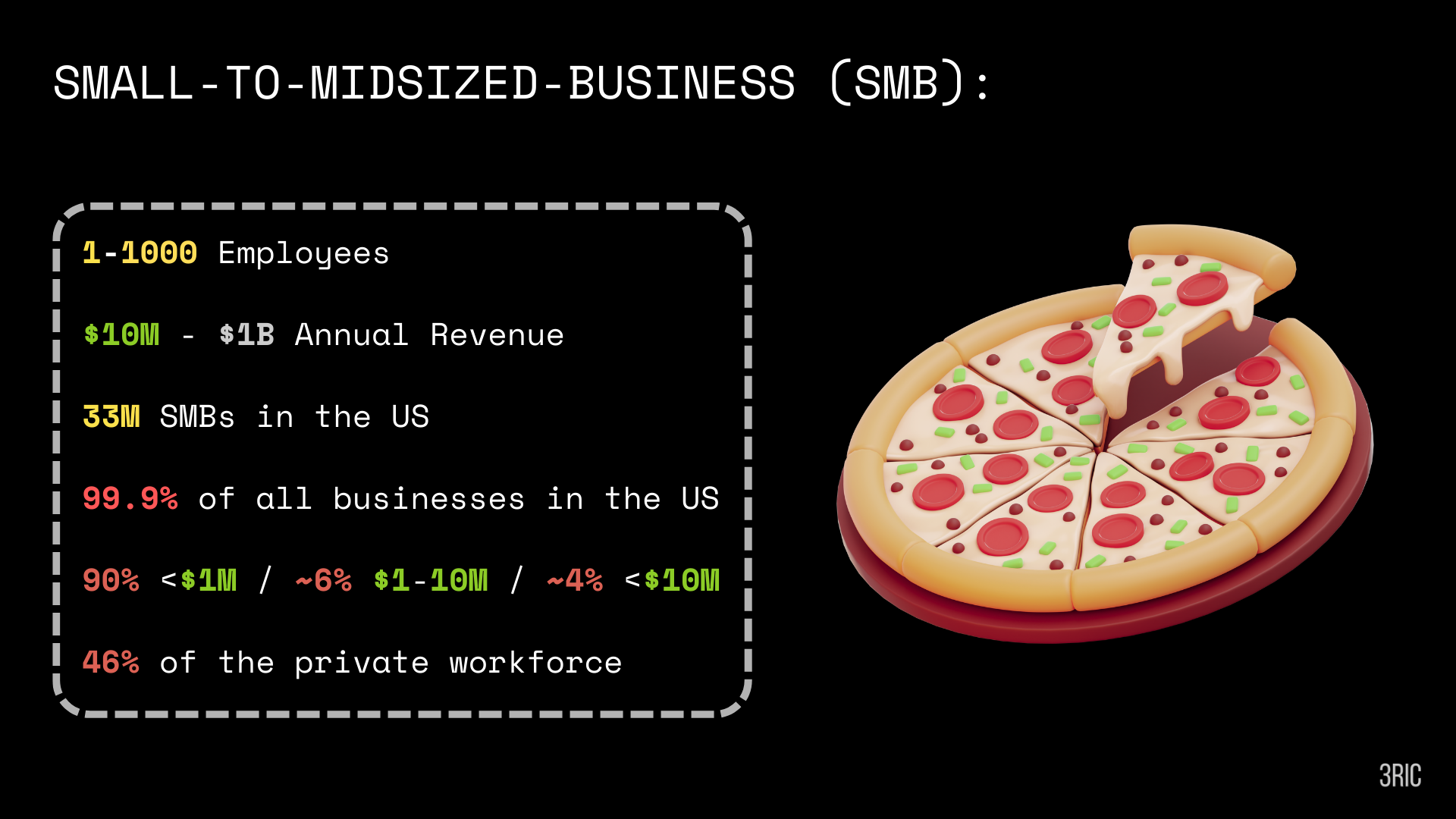
“SMB” is one of those terms that sounds precise until you look closer. By basic firmographics, SMBs range from 1 to 1,000 employees and anywhere from sub-$1M to $1B in annual revenue. That’s… not helpful. In reality, about 90% of U.S. SMBs make under $1M per year, and only ~4% clear $10M. Here’s the part that matters: 99.9% of U.S. businesses are SMBs, employing ~46% of the private workforce.
Most AI tooling is priced and designed for organizations with dedicated ops, analytics, and IT teams — not owner-operators or lean functional leaders. If AI agents are effectively inaccessible to all but the top slice of companies, we’re not talking about a niche problem. We’re talking about half the country’s working population — from massage therapy or metal fabrication to pizza delivery — all being structurally excluded from productivity gains that compound over time. That’s not just inefficient. It’s a market failure.
What Is an AI Agent?
Put simply, an AI agent is goal-directed software that combines a large language model with planning, memory, and tool execution to do work on your behalf. Whereas LLMs generate ideas, agents close loops. They can forecast demand, trigger actions, update systems, learn from outcomes, and keep going. The economic value here isn’t intelligence, it’s throughput: Reducing decision latency and turning once-fragile workflows into always-on systems.
For a small business, an agent can turn one exhausted owner into five competent managers who never sleep, never forget, and never quit. For a mid-sized business, agents automate repeatable execution while humans focus on judgment, taste, and accountability (things machines are still terrible at). AI agents simply orchestrate LLMs, APIs, and business systems to autonomously execute multi-step workflows with feedback loops.
Of course, none of this is free. Want agents that acquire customers, analyze behavior, optimize campaigns, sync to your CRM, and coordinate across functions? You can buy that (or build it) if you have capital and talent. If you can’t? Someone in your segment will. And they’ll scale faster, deliver better service, and rely less on headcount and agencies.
The path forward with AI agents isn’t replacing people or reinventing industries, but absorbing the repeatable work that quietly slows down every business.
Agentic Commerce, Right Now (Not the Deck Version)
Six months ago, “AI agents” were still a novelty in most SMB circles. As recently as May 2025, here in Seattle, I was still hearing: “Wait, what’s an agent?” Today, the pendulum has swung hard in the other direction. We’ve entered the FOMO fatigue phase. Feeds are flooded with demos, hot takes, and overnight success stories. Everyone senses there’s an opportunity here. Almost no one has a clear, calm answer to the same question: Where do I actually start?
One practical starting point is surprisingly unglamorous: jobs and tasks. Rather than beginning with tools, many SMBs are better served by asking where time is actually spent inside the business. Public datasets like O*NET already map common roles, responsibilities, and task distributions across industries. When you pair that kind of occupational data with AI, patterns emerge quickly: repetitive work, high-friction handoffs, and tasks where speed and consistency matter more than human nuance. (See the Masterclass, How to Become Indispensable, to easily run this exercise.)
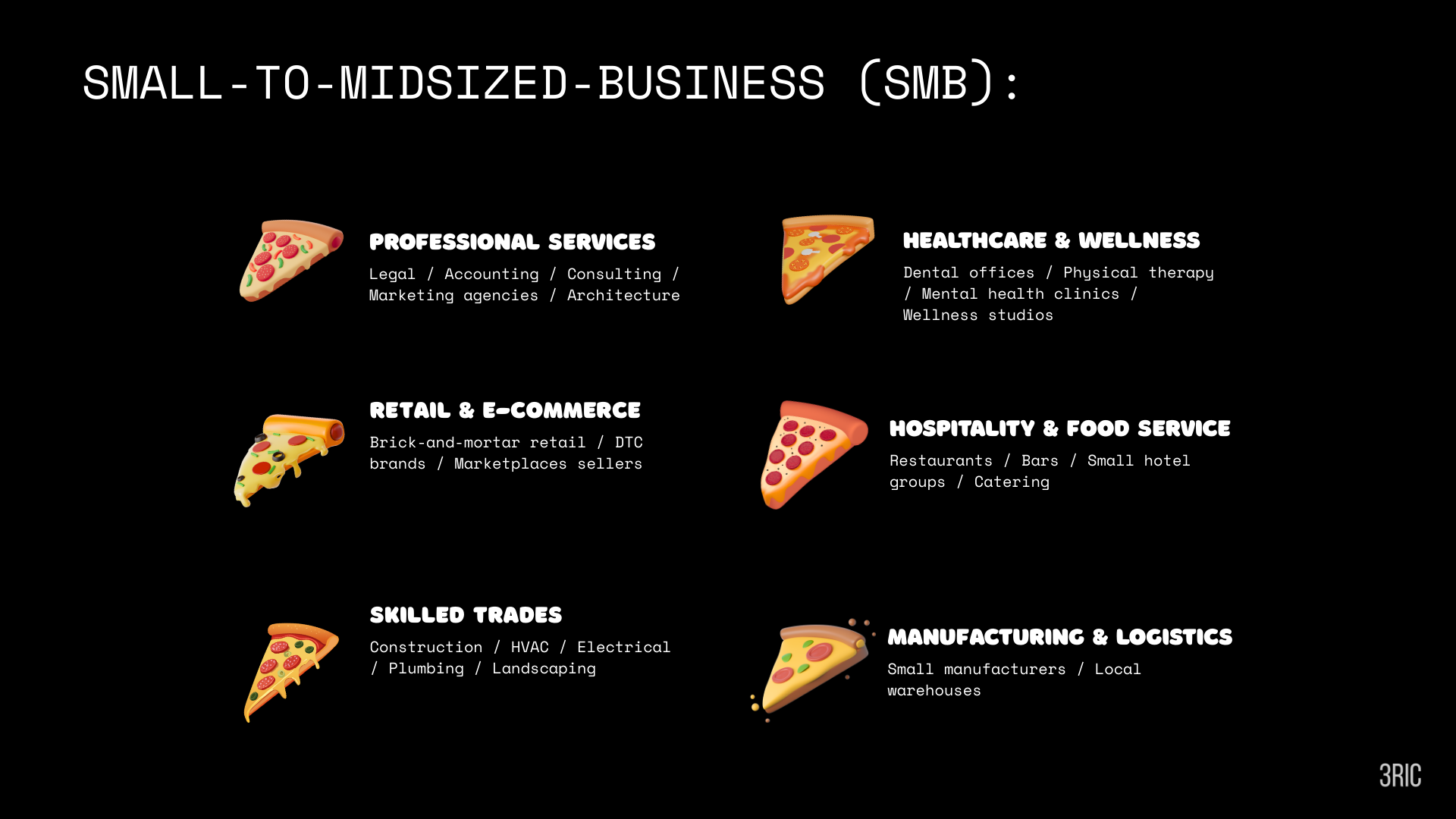
That’s where agents begin to make sense. Not as a replacement for people, but as a way to absorb the repeatable work that quietly taxes teams every day. This approach matters because SMBs span wildly different verticals — healthcare, retail, trades, logistics, hospitality, and professional services. On the surface, their workflows look nothing alike. But underneath, the business mechanics are remarkably consistent.
Every business, whether it sells therapy sessions, roofing, or pizza, must:
Attract customers
Convert them
Deliver value efficiently
Retain them profitably
Manage cash, labor, and costs
Agentic models already exist for each of these functions. What’s missing is a focus on identifying which workflows are worth automating first because they materially impact revenue or margin. The highest-leverage opportunities cluster where work is repeatable, measurable, and shared across industries: go-to-market execution, core operations, and financial management. That’s where agents stop being impressive and start being useful.
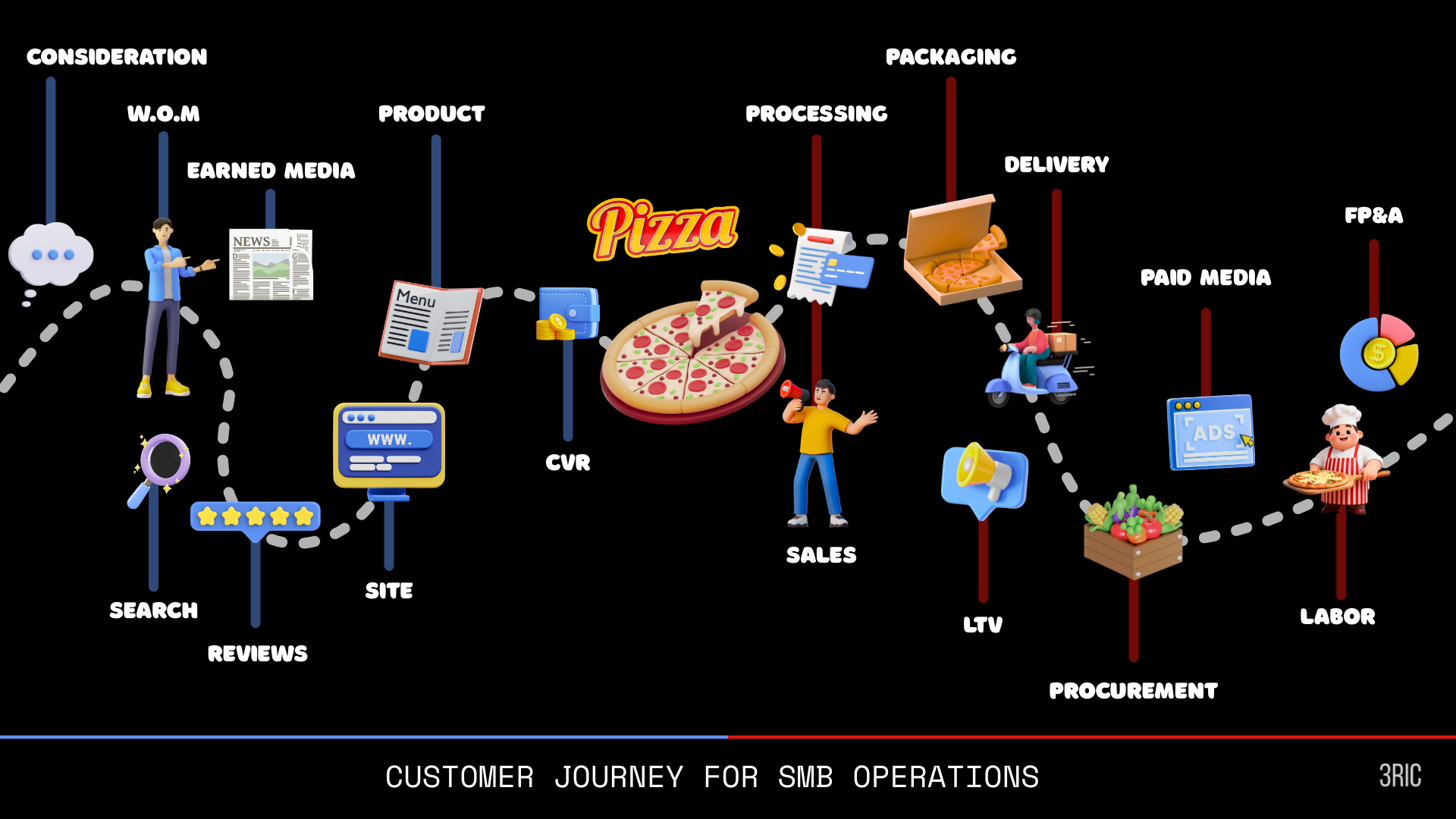
Every business must attract, convert, and retain customers while managing costs, but many agentic models still exist in theory without the practical integrations SMBs rely on.
How SMBs Should Decide Where AI Belongs (and Where It Doesn’t)
The question isn’t “Can AI do this?” It’s “Does automating this meaningfully increase revenue or reduce costs?” Many tasks are human-led for good reason, especially anything involving trust, nuance, or emotional intelligence. But surrounding those moments are dozens of operational steps where speed, consistency, and scale matter far more than charm.
The best AI use cases target high-volume, low-variance tasks adjacent to human decision-making. To make this concrete, let’s use a universally understood business model: pizza. No, pizzerias aren’t the ideal AI customer profile. But they perfectly illustrate the operational reality most businesses face, and where agents can quietly create a durable advantage.
Acquisition: Word of Mouth, at Scale
Customers choose businesses the same way they always have: recommendations, reputation, and signals of trust. Good experiences might get shared once. Bad ones get shared ten times. That’s why word-of-mouth (WOM), reviews, rankings, and earned media matter so much. Most SMBs manage them reactively, if at all.
Agents can autonomously monitor signals, trigger outreach, generate content variants, and optimize sites across channels. Today, review solicitation, content placement, and site optimization are mostly manual, inconsistent, or outsourced. Meanwhile, SEO is giving way to answer engine optimization (AEO), and random acts of marketing are getting more expensive and less effective. Agents can help propose updates to sites so content is better structured for LLMs like ChatGPT to understand (the days of keyword stuffing for better page rankings are gone). Agents can also systematize reputation-building: monitoring sentiment, prompting reviews at the right moments, refreshing content, and continuously improving visibility — without adding headcount.
Conversion, Service Delivery, and Lifetime Value
Once a customer engages, the real work begins. What converts best? What’s easiest to deliver? What’s the highest margin product or service? Which customers should get which offers, through which channel, at what time?
Most SMBs answer these questions with gut feel and spreadsheets (if at all). Packaging is especially painful. Whether it’s a proposal, quote, bundle, or RFP, humans spend enormous time translating tacit knowledge into a sellable structure. Agents can hyper-personalize offers, generate proposals, manage onboarding, and trigger lifecycle actions based on behavioral and transactional data. They might accelerate packaging, personalize education, guide onboarding, and surface expansion opportunities based on real behavior — not generic drip campaigns. This matters because traditional automation is failing. What used to take 100 emails to land a deal now takes 10,000. AI agents offer a path out of that arms race by replacing volume with relevance.
Advertising Without the Middlemen
Agents can act as advertising mavens, ingesting campaign data, testing variants, reallocating budgets, and optimizing performance in near real time. For many SMBs, advertising is effectively outsourced to agencies, platforms, and algorithms they don’t control (Google and Meta capture 50–75% of their ad spend). Agent-led systems can analyze performance, reallocate spend, generate creative, and test messaging continuously to reduce dependency on intermediaries and improve capital efficiency.
Production, Operations, and Margin
Finally, there’s the work no one brags about: COGS, inventory, vendors, labor, forecasting. These are repeatable, data-heavy processes that quietly determine profitability. Agents can forecast demand, flag waste, optimize schedules, and improve purchasing decisions, freeing humans to focus on exceptions and strategy.
The Real Opportunity
Across the customer journey, we see where humans are irreplaceable, and where AI agents create real, compounding advantage. If we stop designing AI top-down for massive enterprises and instead look bottom-up at SMB reality, we uncover a massive, underserved market. Not for bespoke solutions, but for high-leverage, widely applicable workflows that make work better for nearly half the American workforce. AI doesn’t need to replace people to matter. It just needs to give them their time back — and their businesses a fighting chance.
Stop Talking About AI. Start Using It.
If this resonates, this is exactly the work I do at 3ric.co. I run focused diagnostic workshops with SMB leadership teams to map the customer journey and core operations, identify the few moments where AI agents actually move revenue or margin, and design practical agent-led workflows that sit cleanly alongside the systems you already use. In partnership with Tagmark, a technical implementation studio, we move beyond strategy decks into real deployment. We can integrate agents with legacy CRMs, data sources, and operational tools without boiling the ocean. The goal isn’t “doing AI.” It’s removing friction, buying back time, and making your business run meaningfully better within weeks, not quarters.
